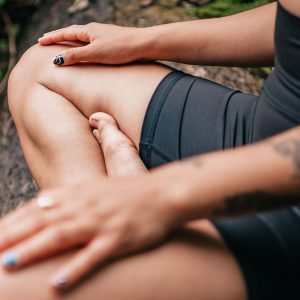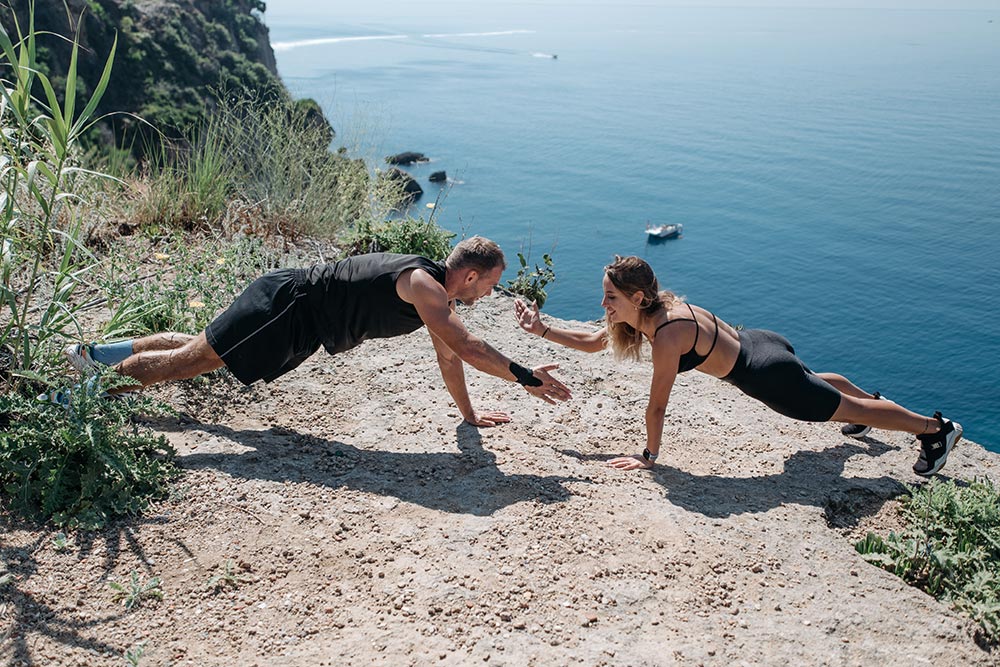
What does being strong mean to you? Perhaps it’s lifting heavier weights or performing better at your favourite sport. But it might just as easily mean carrying your shopping, lifting your child, climbing the stairs with ease or enjoying an active weekend without feeling exhausted afterwards.
Most of the time, we barely notice our strength; we simply experience it as the ability to move through life with confidence and ease. So, what is it? And how do we build it, and nurture it?
From a physical perspective, strength is not a single quality, but the result of several elements working together, from healthy muscles and bones to balance, mobility and coordination. Understanding how these contribute to our physical capacity can help us make choices that support strength, not just for today, but for the years ahead.
Muscle Does More Than Move Us
We tend to think of muscles primarily in terms of what they allow us to do: move, lift, carry and exercise. But skeletal muscle is much more than the body’s movement system; it is active tissue that interacts with many other processes involved in keeping us healthy.
Healthy muscle helps the body manage and store glucose, supports our joints and works alongside our bones to provide stability and physical resilience. It also contributes to balance and plays an important role in our broader metabolic health. Increasingly, maintaining healthy muscle is being recognised as an important part of supporting health and physical function throughout life.
This makes muscle relevant to all of us, not only athletes or those interested in changing their physique. While muscle is only one part of being strong, maintaining it helps provide the physical foundation that allows us to move confidently, remain capable and continue doing the things we enjoy.
Strength Gives Us Capacity
One of the most useful ways to think about strength is as capacity; the physical reserve we have available to meet the demands of everyday life. If climbing a flight of stairs requires most of that reserve, reaching the top can feel tiring and doing it repeatedly becomes demanding. Increase your physical capacity, however, and the stairs remain exactly the same, but the effort required to climb them becomes proportionately smaller.
The same principle applies to carrying shopping, walking uphill, lifting children, playing sport or simply getting through a busy day. As we become stronger and more physically capable, everyday activities draw less heavily on our available reserves.
This may also help explain why strength can influence how energetic we feel. Being stronger won’t give you an endless supply of energy, but will increase your capacity, so the things you already do require less effort and feel easier.
Strength Means Different Things at Different Stages of Life
What we want from our strength naturally changes throughout life. In our younger years, it may be closely linked to fitness, sporting performance or physique. As life becomes busier, strength can help us meet the physical demands of work and family life, while later it becomes increasingly valuable for maintaining balance, mobility and independence.
None of these goals is more important than another. Improving your performance on the sports field is just as valid a goal as wanting to lift a grandchild or climb a flight of stairs with confidence. What changes isn’t the value of strength, but what we want our strength to make possible.
And because the strength and physical capacity we develop today contribute to the reserves we carry forward, being strong is both about enjoying what our bodies can do now and investing in what we want them to keep doing in the future.
When Muscle Begins to Change
Like many aspects of our health, muscle changes throughout life. Without regular physical challenge, we gradually begin to lose muscle mass and strength as we get older, while periods of illness, injury or inactivity, as well as hormonal and other health changes, can accelerate the process.
Often, these changes are subtle. We may simply notice that something feels heavier than it used to, getting up from the floor requires a little more effort, or activities we once took for granted have become more demanding.
The encouraging news is that muscle remains remarkably responsive to appropriate challenge throughout life. By continuing to use and strengthen our muscles, we can influence our physical capacity well beyond the years we traditionally associate with peak fitness. Muscle may change as we age, but our ability to invest in strength doesn’t simply disappear.
Building Strength Doesn’t Have to Mean Becoming a Gym Person
Building strength doesn’t necessarily mean spending hours lifting weights in a gym. While traditional weight training is an excellent option, resistance can come from free weights, bands, machines or our own body weight, while activities such as Pilates and functional exercise can also help challenge and strengthen muscles.
What matters is giving our muscles enough of a challenge to encourage them to adapt and, over time, gradually increasing that challenge as we become stronger. Nutrition and recovery are part of the picture too, providing the resources and opportunity our bodies need to maintain, repair and build muscle.
As with most aspects of health, consistency matters more than perfection. You don’t need to train like an athlete to benefit from being stronger; you simply need to give your muscles regular opportunities to work, adapt and become more capable.
Strength and Confidence Often Grow Together
Strength isn’t only about what our bodies can do; it can also influence how we feel about ourselves. Feeling physically capable may give us the confidence to try something new, return to exercise, travel more comfortably or re-engage with activities we may have gradually stopped doing.
For some people, becoming stronger may also change muscle tone, posture or body composition, influencing how they feel about their appearance. Wanting to feel comfortable and confident in your own body isn’t inherently superficial – the important thing is that these goals reflect what matters to you, rather than someone else’s expectations of how you should look.
One person may be training for an event, another may want to feel more comfortable in their clothes, while someone else simply wants to feel more like themselves again. When our goals are genuinely our own, strength, appearance, confidence and wellbeing don’t need to compete; they can all be part of living well.
Can Technology Support Muscle Strength?
As interest in fitness, wellbeing and longevity has grown, so too have technologies designed to complement more traditional approaches to muscle conditioning. At Neuromed, EMSCULPT NEO is one option that you may consider according to your goals and needs.
The technology combines high-intensity electromagnetic stimulation, which produces powerful muscle contractions, with radiofrequency energy to target both muscle and the tissues within the treatment area. If you’re already investing in movement, nutrition and your overall health, this may offer additional support toward your particular strength or body-composition goals.
The important word here is support. Technology cannot replace the wider benefits of regular movement, progressive physical challenge, good nutrition and adequate recovery, and nor does everyone need it. Rather, EMSCULPT NEO can be viewed as another potential tool within a broader approach to feeling stronger, more capable and more confident in your body.
From the Core to the Pelvic Floor
Strength also involves muscles we may think about less often. For example, did you know that your core helps provide stability and support during movement, and your pelvic floor plays an important role in continence, pelvic support and aspects of sexual function. Together, they contribute to the strong, stable foundation we rely on in everyday life.
Here’s something else not everyone knows…pelvic floor weakness can affect both women and men. This can become more noticeable following pregnancy and childbirth, hormonal changes, particularly for women, and after surgery or as we get older. And, although symptoms such as urinary leakage are common, embarrassment can sometimes mean people simply learn to live with them rather than seeking help.
Alongside appropriate assessment and approaches such as pelvic floor exercises, EMSELLA may offer an additional treatment option for suitable individuals. The goal isn’t simply stronger muscles, but what that strength makes possible: exercising, travelling, laughing and participating in everyday life with greater freedom and confidence.
Strong for What Matters
We often talk about strength in terms of what we can measure: how much we can lift, how many repetitions we can complete or how our bodies look. These measures can be useful, particularly when we’re working towards specific fitness or performance goals, but they don’t tell the whole story.
Perhaps a more meaningful question you may want to ask yourself is: What do I want to be strong enough to do?
For one person, that may mean running faster, lifting heavier or performing better at their chosen sport. For another, it might mean travelling confidently, carrying a grandchild or getting up easily from the floor. And for someone else, it may simply mean feeling stronger and more comfortable in their own body.
There is no single measure of strength that matters to everyone. Ultimately, its value lies not simply in having it, but in the freedom and possibility it gives us to live the lives we choose.
Take-Home Message: Strength Creates Possibility
I’d like to leave you with a slightly different way of thinking about strength. Rather than measuring it only by how much you can lift, how you perform or how your body looks, consider what you want your strength to make possible.
Perhaps that means performing better at a sport you love, feeling more confident in your body, keeping up with your children or grandchildren, or simply maintaining the freedom to continue doing the things you enjoy.
Building and maintaining strength is an investment in that possibility. Regular movement, appropriate physical challenge, good nutrition and recovery provide the foundations, while modern technologies may offer additional support towards particular goals.
At Neuromed, we believe those goals should always be personal. If you’d like to explore how Neuromed’s wellness practitioners and technologies could support yours, contact our team to discuss the options available and what might be right for you. To learn more or speak to one of our consultants, please contact our Galway office (091) 379 215, Dublin office (01) 965 3294 or email: info@neuromedclinic.com
Because ultimately, strength isn’t just about what your body can do. It’s about what your strength allows you to do with your life.
Dr. Susan McGarvie
Mindfulness-Based Therapeutic Coach
Dr. Susan McGarvie works with adults to support personal change and growth using mindfulness, positive psychology, and coaching. With over 20 years of experience across healthcare, nonprofits, and academia, her work combines evidence-based practice with compassionate, practical support.